

Ever thought of making your streaming nights feel like a movie theater at home? With so many smart TVs out there, picking the right one can be tough. Each TV claims to offer the best streaming quality.
Your viewing habits and the content you like play a big role in choosing a TV. We’ll guide you through the latest display tech and easy-to-use interfaces. You’ll also learn how trends affect your TV choices.
We’ll share key info and tips to find the perfect smart TV for you. Let’s start making your home entertainment setup amazing!
Understanding Smart TV Features
Exploring smart TVs means learning about key features that make watching movies and browsing the web better. These features can greatly improve your viewing experience. Let’s look at what makes a smart TV special.
Display Technology: LED, OLED, or QLED?
Choosing a smart TV starts with the display technology. The debate between LED, OLED, and QLED can be tough. LED screens are bright and affordable. OLED displays offer deep blacks and contrast. QLED uses quantum dots for high-definition and brightness.

Resolution: 4K, 8K, or Full HD?
Resolution options range from Full HD to 4K and 8K. Higher resolutions mean more pixels and clearer details. Full HD is good, but 4K is the norm for modern TVs. For top-notch visuals, 8K is the latest, but content is still limited.
Refresh Rate and HDR
Refresh rate and High Dynamic Range (HDR) are key for a great view. A high refresh rate, like 120Hz, cuts down on motion blur. HDR boosts contrast and color, making images richer and more real. These features together offer an unmatched viewing experience.
Best Brands for Smart TVs
Choosing a smart TV means picking from the best brands. This ensures a great viewing experience, reliability, and cutting-edge tech. Samsung, LG, Sony, and Vizio are leaders in consumer electronics.

Top-Rated Smart TV Brands
Samsung and LG are at the top for their innovative features and high-quality displays. They have earned a lot of brand loyalty from customers.
Brand-Specific Features
Samsung uses QLED technology for bright colors and sharp images. LG’s OLED displays offer perfect blacks and contrast. Sony is known for its image processing, and Vizio provides great value with quality displays.
Customer Reviews
What customers say is key to a brand’s reputation. Samsung, LG, and Sony get high praise for their picture quality and ease of use. Vizio is loved for its value and features. Positive feedback helps these brands stay popular.
Smart TV Size Guide
Choosing the right size for your Smart TV makes watching shows and movies better. It also makes your entertainment area look great. The best TV size depends on your room’s size and how far you’ll sit from it.
Room Size and Viewing Distance
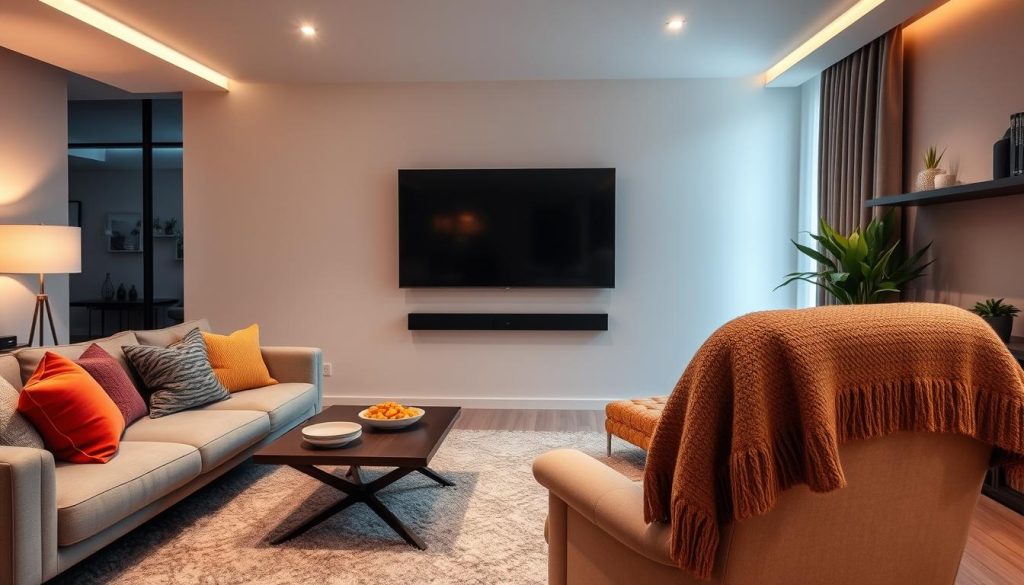
Think about your room’s size and where you’ll sit when picking a TV size. Big rooms can handle larger TVs, while small ones might need smaller ones. A good rule is to multiply the TV size by 1.5 to 2.5 to find the best viewing distance. For example, a 60-inch TV is best seen from 90 to 150 inches away.
Popular Sizes: 55-inch, 65-inch, and More
Many people choose TVs that are 55-inch or 65-inch. These sizes are good for both watching movies and playing games. They give you a big screen without taking up too much space.
Wall-Mounted vs. Stand-Mounted
Choosing between wall-mounted and stand-mounted TVs is important. Wall-mounted TVs save space and look modern. Stand-mounted TVs are easier to move and access. Pick a size that fits your room and viewing style best.
Connectivity Options on Smart TVs
Smart TVs need to connect well with your home entertainment. They offer many ways to do this, like HDMI ports and wireless options. This makes sure your TV works well with many devices.
HDMI Ports
HDMI ports are key for linking up devices like gaming consoles and Blu-ray players. Smart TVs usually have several HDMI inputs. These support high resolutions and fast refresh rates for a smooth viewing experience.
Wi-Fi and Ethernet
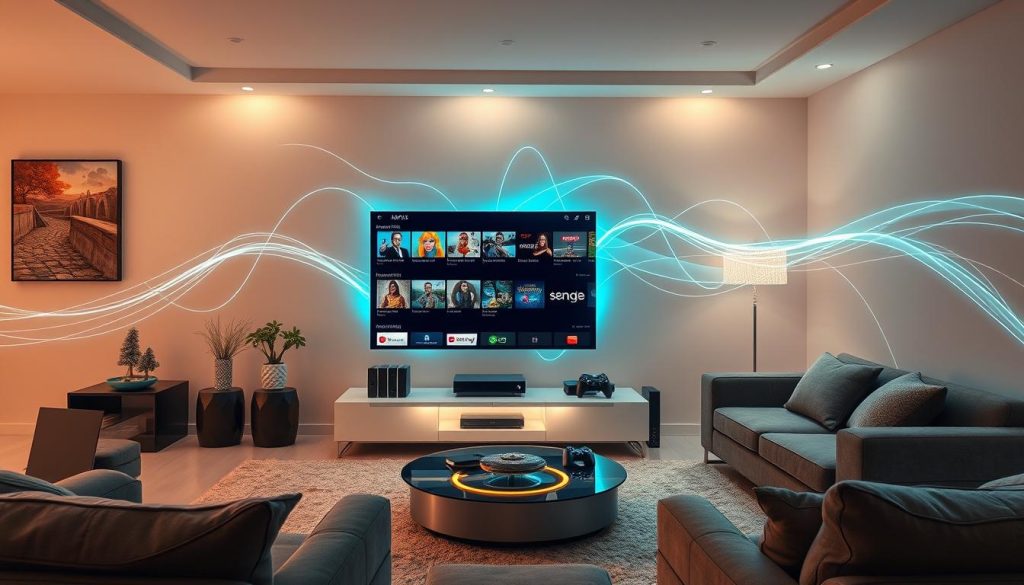
Smart TVs can join your network via Wi-Fi or Ethernet. Wi-Fi is easy, but Ethernet gives a more stable and fast connection. This is great for streaming 4K and 8K content without drops.
Bluetooth and Smart Home Integration
Bluetooth lets you connect accessories like headphones and game controllers wirelessly. Smart TVs also work with smart home tech like Amazon Alexa. This means you can control your TV with your voice and sync it with other smart devices.
Operating Systems and User Interface
Choosing the right operating system for your Smart TV is key to a great user experience. Each system has its own features, easy-to-use interfaces, and works well with many apps and services. Let’s look at the options to find the best fit for your streaming needs.
Android TV
Android TV is great for those who use Google services a lot. It works well with Google Assistant and Chromecast. It has lots of apps from the Google Play Store and is easy to customize to your liking.
Roku TV
Roku TV has one of the simplest interfaces, making it easy to use. It has a wide range of free and paid channels. This means you can quickly find your favorite shows and movies, making your viewing experience better.
Tizen and WebOS
Samsung’s Tizen and LG’s WebOS are unique platforms. Tizen focuses on a clean look and fast app loading. WebOS is known for its magic remote and multitasking. Both offer a great user experience, making them good choices.
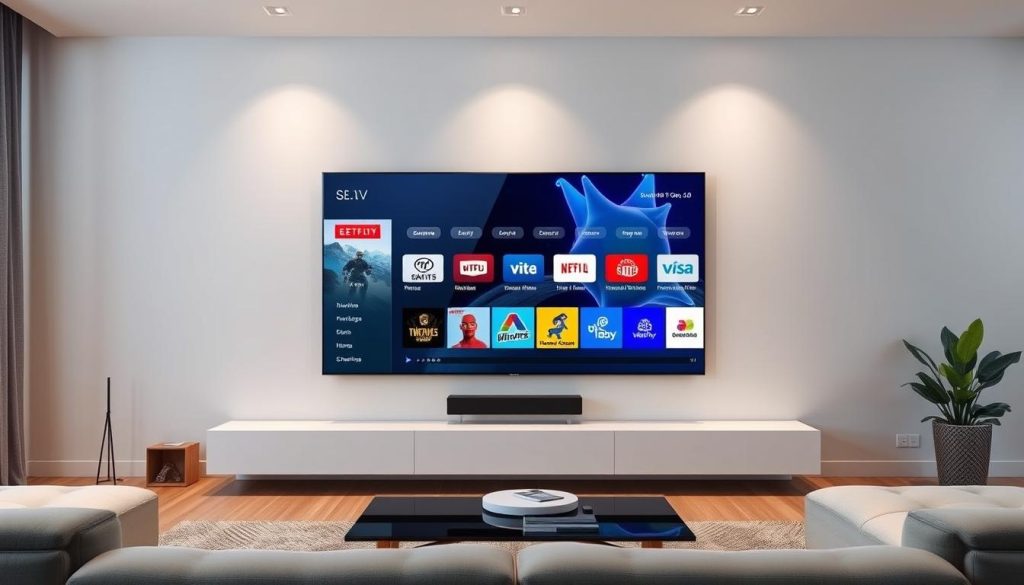
When choosing an operating system, think about what matters most to you. Do you want Roku TV’s easy interface, Android TV’s customization, or Tizen and WebOS’s speed? Your choice will change how you use your Smart TV every day.
How to Choose the Best Smart TV for Your Streaming Needs
Choosing the right Smart TV is all about finding the perfect match for your viewing habits. Look for features like great display quality, easy-to-use interfaces, and support for many streaming devices. This will change how you watch your favorite shows and movies, making it more convenient than ever.
The selection process can be overwhelming with so many options available. Your viewing habits are key in picking the right TV. For movie lovers, high resolution and sound quality are essential. Gamers might want a TV with a high refresh rate.
Also, consider the TV’s connectivity options. Smart TVs with many ports and wireless features make connecting devices easy. This ensures a smooth transition between gadgets, improving your overall viewing experience.
Choosing the best Smart TV is about finding the right balance between your needs and the latest tech. By carefully considering each feature, you’ll find the perfect TV for your home.
Sound Quality and Audio Options
When picking a smart TV, sound quality is just as important as the picture. How do built-in speakers stack up against external systems? And what about Dolby Atmos and DTS: X? Let’s explore these options.
Built-in Speakers vs. External Sound Systems
Most smart TVs have built-in speakers that work well. But for better sound, consider external surround sound systems. They offer better audio and make movies and shows more exciting.
Dolby Atmos and DTS: X
Advanced audio tech is changing home audio. Dolby Atmos and DTS: X are leading the way. Dolby Atmos adds height channels for a 3D sound. DTS: X lets you set up speakers in different ways for a more immersive experience.
Budget Considerations
When picking a Smart TV, think about your budget. Smart TVs range from a few hundred to thousands of dollars. But, you can find great deals without losing out on important features.
Look at the value you get for your money. Mid-range TVs from Samsung, LG, or Sony offer great streaming at a lower cost. Even budget models now have 4K and HDR, which used to be pricey.
Consider last year’s models for a better deal. They’re cheaper but still pack a punch. This way, you save money without sacrificing quality.
Watch for sales like Black Friday for even better deals. By choosing wisely, you can get a great streaming setup without spending too much.
Know what you need and stick to your budget. Even an affordable device can provide a fantastic viewing experience. You don’t have to spend a lot to enjoy great entertainment.
Energy Efficiency and Environmental Impact
Choosing a Smart TV means looking at its energy efficiency ratings. These ratings show how much energy your TV uses. This affects your electricity bill and the environment. A higher energy star rating means you’re choosing a greener option for your entertainment.
Today’s Smart TVs use eco-friendly tech to save energy without losing quality. Some have automatic brightness control. This adjusts the screen’s light based on the room’s light, saving even more energy.
Knowing how your Smart TV affects the environment helps you make better choices. Eco-friendly tech in these devices cuts down energy use and reduces waste. This is good for the planet and for you.
Remember, always check for the energy star label. It’s not just a sticker. It means the TV is energy-efficient and sustainable, leading the way in green home entertainment.
By focusing on energy efficiency, you help the environment. This choice lets you enjoy your favorite shows while being kind to the planet. It’s a win-win for your home and the Earth.
Conclusion
Choosing the best Smart TV means looking at many features and options. You need to find the perfect one for your streaming needs. It’s important to know about display technologies and resolutions.
Also, understanding the unique qualities of top brands is key. The right Smart TV can make your living room the ultimate entertainment spot.
Think about more than just picture quality. The TV’s connectivity, operating system, and user interface matter a lot. Good audio, like Dolby Atmos, adds to the immersive experience.
Don’t forget about the TV’s size, energy use, and cost. These factors are important for your final choice. This guide will help you pick a Smart TV that meets and goes beyond your expectations.